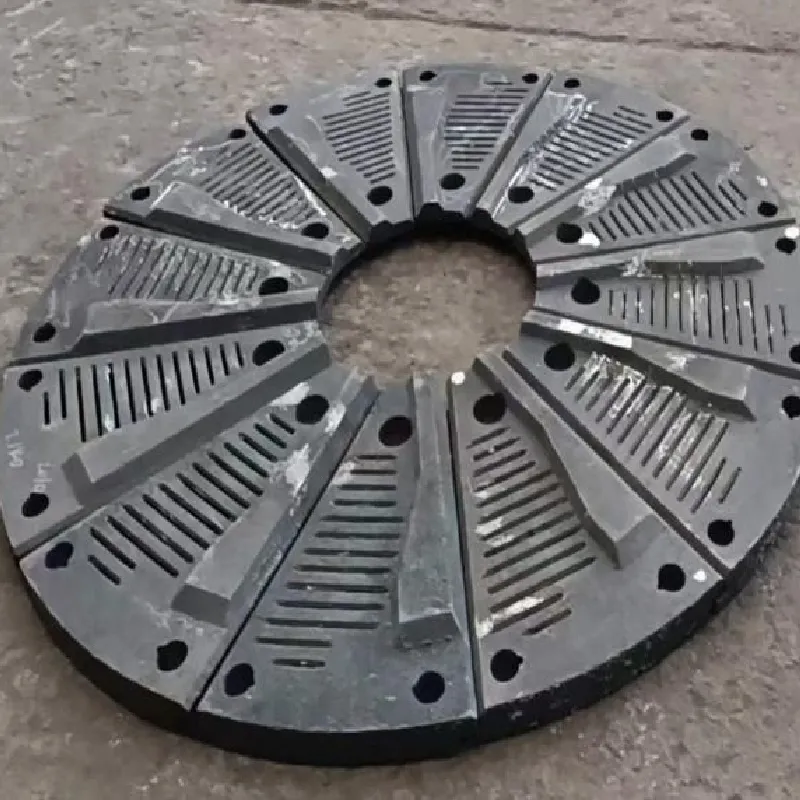
High Performance High Chromium Liners from grinding cylpebs manufacturers
Selecting high-performance wear-resistant components is a critical operational decision for engineers in the cement, mining, and quarry industries. The efficiency of a ball mill depends heavily on the synergy between the grinding media and the internal liners, which must withstand extreme abrasion and repeated impact. High chromium alloy liners serve as the primary defensive barrier, preventing mill shell wear while optimizing the trajectory of the grinding charge to ensure maximum throughput.
For operations looking to reduce downtime and energy consumption, understanding the metallurgical properties of these liners—such as the balance between hardness and toughness—is essential. By utilizing materials specifically engineered for high-stress environments, plants can achieve a significant reduction in the frequency of liner replacements and a measurable improvement in the final product's gradation.

The Role of High Chromium Alloys in Heavy-Duty Grinding Applications
In the abrasive environment of a ball mill or hammer crusher, the internal surfaces are subjected to continuous scratching and high-velocity impacts. High chromium alloy liners are specifically designed to combat these forces. Their primary strength lies in the formation of hard chromium carbides within a martensitic or austenitic matrix, creating a surface that resists both adhesive and abrasive wear.
Unlike standard manganese steels, which rely on work-hardening, high chromium alloys provide high initial hardness. This ensures that the liner maintains its profile for a longer period, which is vital for maintaining the grinding efficiency of the mill. When the liner wears down unevenly, the grinding media cannot be lifted effectively, leading to "slipping" and a sharp increase in power consumption per ton of material processed.
The versatility of these materials allows them to be used across various components, including guard plates and guide rails. By tailoring the chrome content, manufacturers can adjust the material to be either more impact-resistant for primary crushing or more wear-resistant for fine grinding chambers.

Technical Advantages of High Chromium Metallurgy for Mill Longevity
The primary value of utilizing a high chromium alloy liner is the drastic reduction in maintenance costs. These materials exhibit high tensile strength and an impressive yield point, allowing them to absorb shocks without cracking. This stability is crucial in the first chamber of mills where larger feed materials impart significant potential energy during the crushing phase.
Key technical advantages include:
- Extreme Hardness: High HRC values ensure that the surface resists penetration from abrasive particles.
- Corrosion Resistance: The high chromium content creates a passive oxide layer, protecting the liner from corrosive chemical reactions in wet grinding processes.
- Dimensional Stability: Low deformation during the wearing process helps maintain the optimal mill volume and grinding kinetics.
- Economic Efficiency: While the initial investment may be higher than low-alloy steel, the extended service life results in a lower total cost of ownership (TCO).
Furthermore, the integration of elements like Molybdenum (Mo) and Nickel (Ni) in specific grades enhances the toughness of the matrix, preventing the brittle failure often associated with ultra-hard materials. This balance allows the liner to operate reliably in harsh environmental conditions without premature failure.
Selecting the Right Alloy Grade Based on Operational Requirements
Not all grinding environments are identical, and therefore, a "one size fits all" approach to liner selection often leads to inefficiency. Procurement managers must evaluate the specific nature of the feed material—its hardness, moisture content, and chemistry—to choose the appropriate alloy designation.
For instance, in applications where impact is the dominant force, a medium chromium medium carbon alloy (such as ZG30Cr5MoRE) may be preferable due to its superior toughness. Conversely, in environments characterized by high-intensity sliding abrasion, high chromium cast irons with chrome content exceeding 20% (like KmTBCr26) provide the necessary surface hardness to minimize material loss.
When evaluating a potential partner among grinding cylpebs manufacturers, it is vital to verify their ability to customize the chemical composition. The ability to adjust elements like Silicon (Si) and Manganese (Mn) allows for the optimization of the microstructure—balancing Carbides (C), Martensite (M), and Austenite (A)—to match the specific stress profile of the mill.
Comparative Analysis of Chromium Alloy Material Properties
| Material Designation | Primary Microstructure | Hardness (HRC) | Typical Application |
|---|---|---|---|
| ZG30Cr5MoRE | M+B+C | ≥45 | Medium Impact Liners |
| ZG40CrMoNiRE | M+Fe | ≥40 | Low Alloy Impact Zones |
| KmTBCr15Mo2 | M+A+C | ≥53 | General Wear Liners |
| KmTBCr26 | M+A+C | ≥55 | High Abrasion Areas |
| ZGCr15SiMn-GT | M+A+C | ≥55 | High-Strength Cast Steel |
Optimizing Mill Productivity Through Wear Part Management
The relationship between the liner and the grinding media is symbiotic. When liners are worn, the mill's internal geometry changes, often leading to a "dead zone" where material is not effectively processed. This results in an increase in the recirculating load and a decrease in overall plant capacity. By utilizing high-quality chromium alloy liners, operators can extend the clearance cycle, reducing the number of times a mill must be opened for inspection.
Operational benefits of optimized liner management include:
- Energy Reduction: Maintaining the correct liner profile reduces the energy required to lift the charge, lowering the carbon footprint of the operation.
- Consistent Gradation: A stable wear rate ensures that the grinding media maintains a consistent size distribution, resulting in a more uniform final product.
- Labor Efficiency: Fewer shutdown intervals mean less manual labor spent on the arduous task of liner replacement.
For those sourcing from professional grinding cylpebs manufacturers, the focus should be on the consistency of the casting. Internal defects or porosity in the liner can lead to sudden failures, causing unplanned downtime that far outweighs the cost of the part itself.
Future Trends in Wear-Resistant Material Engineering
The industry is moving toward "intelligent wear," where the material properties are graded across the component to provide hardness where abrasion is highest and toughness where impact is most severe. This functional grading helps in further extending the life of the liner while reducing the weight of the component.
Furthermore, there is an increasing emphasis on the environmental impact of manufacturing. Modern foundries are adopting cleaner casting technologies to reduce emissions while improving the purity of the alloy. The use of Rare Earth (RE) elements, as seen in designations like ZG30Cr5MoRE, is becoming more common to refine the grain structure and enhance the overall mechanical properties of the cast iron.
As the mining and cement industries push for higher throughput and lower operational costs, the demand for tailor-made wear solutions will grow. The ability to conduct detailed technical analysis and test work before production is what separates a basic supplier from a true solution provider.
Technical FAQ on High Chromium Alloy Liners
What is the primary difference between high chromium cast iron and manganese steel liners?
High chromium cast iron provides high initial hardness and superior resistance to abrasion, making it ideal for sliding wear. Manganese steel is tougher and work-hardens under impact, making it better for high-impact crushing, but it wears faster in purely abrasive environments.
How does chrome content affect the performance of the liner?
Generally, increasing the chrome content (from 1% up to 30%) increases the volume of hard chromium carbides, which improves wear resistance. However, excessively high chrome can increase brittleness, so a balance must be struck based on the impact levels of the application.
Can high chromium liners be used in wet grinding environments?
Yes, they are highly suitable. The chromium content provides excellent corrosion resistance, preventing the material from degrading due to chemical reactions with the slurry or moisture in the feed material.
What should I look for when choosing a supplier for these components?
Look for ISO 9001 certification, a proven track record in the mining or cement industry, and the capability to provide technical analysis and tailor-made alloying options based on your specific material throughput.
How do these liners help in reducing energy costs?
By maintaining their profile longer, they ensure the grinding media is lifted to the correct height for an effective "cataracting" motion. This prevents the media from slipping against the liner, which is a major source of wasted energy in ball mills.
What is the typical hardness range for high chromium alloy liners?
Depending on the grade, hardness typically ranges from 45 HRC for medium-carbon options to over 60 HRC for ultra-high chromium cast irons, depending on the required balance of toughness and wear resistance.
Industry Technical References
- ISO 9001 Quality Management Standards
- ASTM International Material Specifications
- World Steel Association - Alloy Steel Guides
- Research on Chromium Carbide Wear Resistance
For operations seeking to optimize their milling circuits, choosing a partner with deep metallurgical expertise is paramount. By aligning material specifications with real-world application data, you can achieve a sustainable balance between equipment availability and operational cost.
Related Industrial Solutions