0%

Table of Contents

The dry ball mill is a crucial piece of equipment across numerous industries, from mining and cement production to chemical engineering and waste recycling. It’s a mechanical device used to grind or pulverize materials into a fine powder, enabling downstream processes like material blending, chemical reactions, and product refinement. Its robust design and ability to handle large volumes of materials make it indispensable in achieving desired particle sizes for optimal performance. Understanding the intricacies of dry ball mills – their operation, applications, and evolving technologies – is vital for professionals seeking efficient and cost-effective material processing solutions.

Globally, the demand for efficient material size reduction technologies is driven by expanding industrialization, infrastructural development, and growing environmental concerns. Countries with significant mining operations, like China, Australia, and Chile, heavily rely on dry ball mills for ore processing. The cement industry, a cornerstone of construction worldwide, also represents a major user base. The rising focus on waste management and recycling further propels demand as dry ball mills play a key role in processing diverse waste streams into reusable materials. According to recent reports, the global grinding equipment market, including dry ball mills, is projected to reach \$XX billion by 2028, demonstrating a consistent growth trajectory.

Addressing the challenge of achieving consistent particle size distribution while minimizing energy consumption and environmental impact is a key focus in modern material processing. Dry ball mills offer a versatile solution, capable of handling a wide range of materials and providing a controllable grinding process. Continuous advancements in mill design, control systems, and liner materials are pushing the boundaries of efficiency and sustainability in this critical area of industrial processing.
Advancements in Dry Ball Mill Technology for Efficient Material Processing

Introduction to the dry ball mill

Advancements in Dry Ball Mill Technology for Efficient Material Processing

The dry ball mill is a cornerstone of size reduction technology utilized across a spectrum of industrial processes. Its efficacy lies in its ability to consistently grind materials through the tumbling action of grinding media—typically steel balls—within a rotating cylindrical chamber. This method is particularly advantageous for applications demanding a specific particle size distribution and high throughput.

Modern dry ball mills are often equipped with sophisticated control systems allowing for precise adjustment of grinding parameters, such as rotation speed, ball charge, and grinding time. These enhancements optimize performance, improve energy efficiency, and ultimately, lead to superior product quality. The ongoing evolution of dry ball mill technology is focused on sustainability and cost reduction, with innovations like advanced liner materials and intelligent control algorithms.

Defining the dry ball mill

A dry ball mill is a grinding machine used to pulverize materials into a fine powder without the use of a liquid medium. Unlike wet ball mills, which employ a slurry, dry ball mills rely on the impact and attrition forces generated by cascading steel balls within a rotating drum. This process reduces the size of materials through repeated collisions.

The principle behind the dry ball mill's operation is relatively simple yet effective. As the drum rotates, the balls are lifted and then fall back down, impacting both the material being ground and each other. This continuous impact breaks down the material into smaller and smaller particles. The process is influenced by factors like ball size, ball charge, mill speed, and material properties.

Connecting this technology to modern industry is straightforward. From the production of cement and paints to the processing of minerals and the recycling of materials, the dry ball mill is a fundamental component. Its ability to handle various materials, from brittle solids to fibrous materials, makes it incredibly versatile and critical in countless manufacturing processes.

Core Components of a dry ball mill

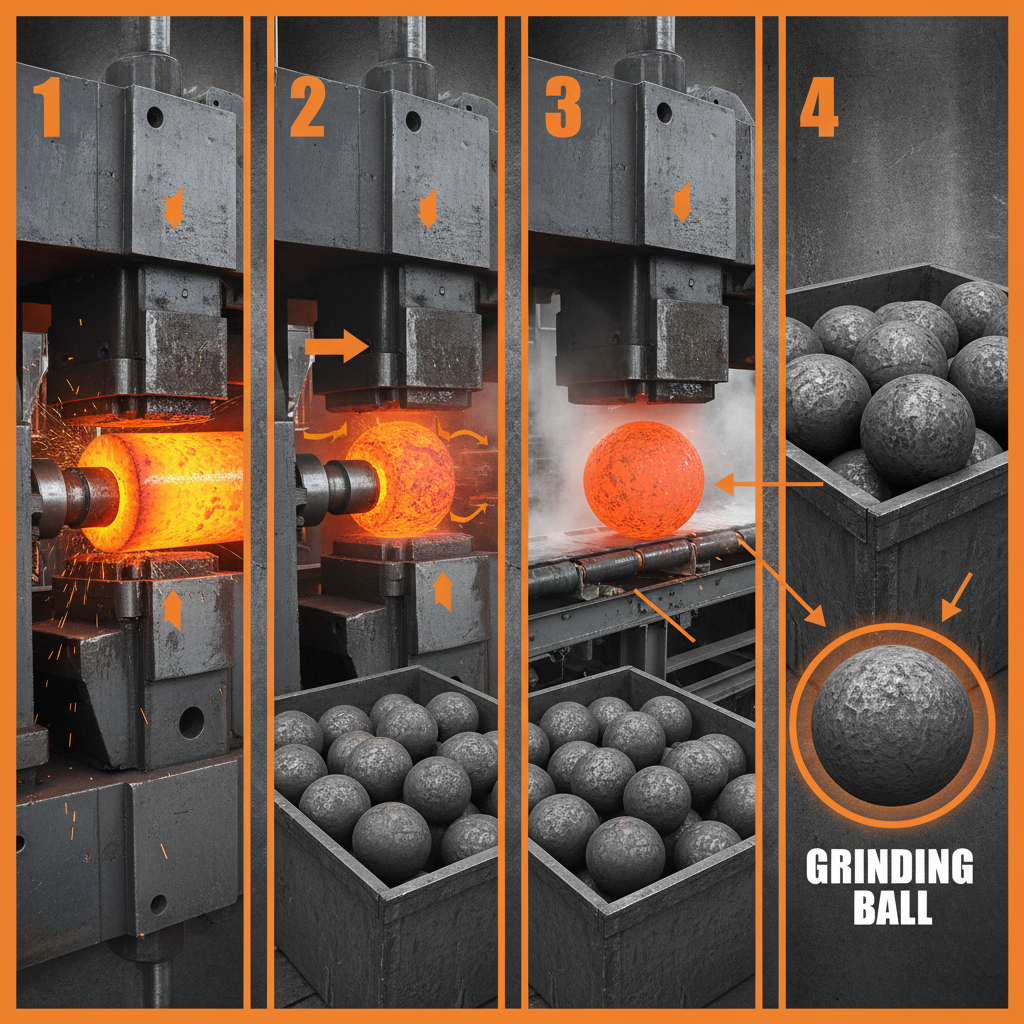
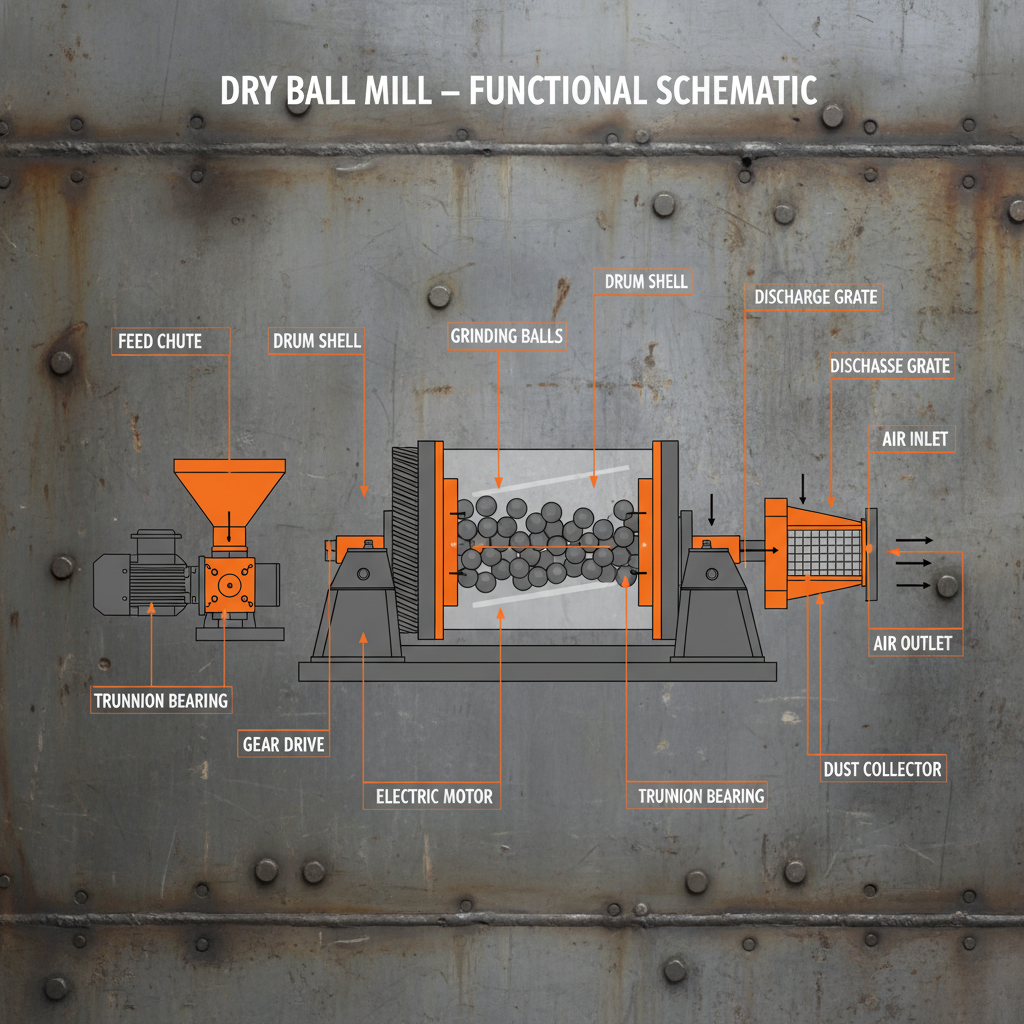
The functionality of a dry ball mill relies on the interplay of several key components. The mill shell, typically constructed from hardened steel, provides the structural integrity and containment for the grinding process. Inside, the grinding media – high-chromium steel balls – are the active agents responsible for size reduction.

The liner protects the mill shell from wear and tear caused by the constant impact of the grinding media. Baffles or lifting lugs are strategically positioned within the drum to enhance ball lifting and cascading, improving grinding efficiency. Finally, the drive system, including a motor and gearbox, provides the rotational force necessary for the entire operation.

The design and material selection of each component directly impact the mill's overall performance, lifespan, and maintenance requirements. Advancements in materials science have led to the development of more durable liners and grinding media, extending the operational life of the mill and reducing downtime.

Key Factors Influencing Performance

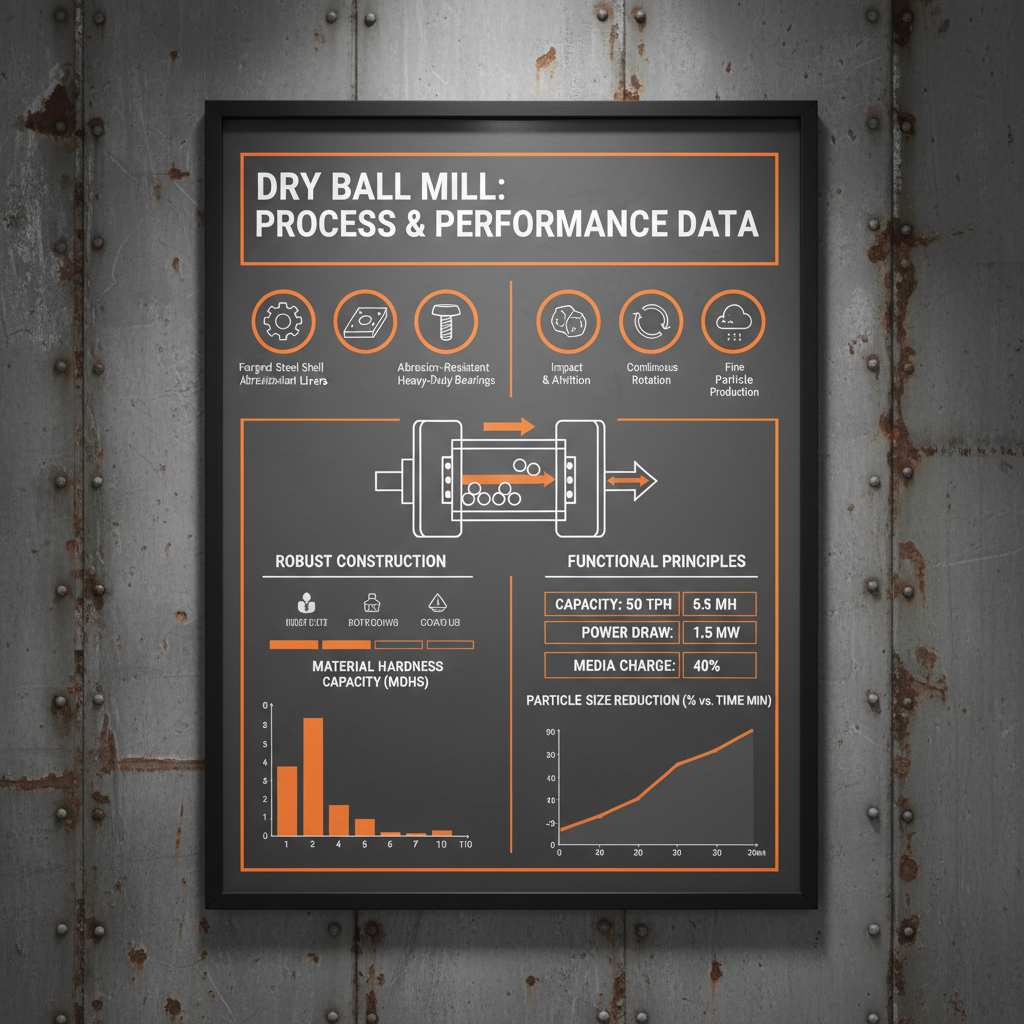
Several factors significantly influence the performance of a dry ball mill. Material Hardness dictates the energy required for size reduction; harder materials necessitate longer grinding times or larger ball charges. Ball Size and Charge play a crucial role – larger balls deliver more impact force, while the overall charge volume affects grinding efficiency.

Mill Speed impacts the cascading action of the balls; an optimal speed ensures sufficient impact without excessive energy dissipation. The Feed Rate needs to be carefully controlled to avoid overloading the mill and compromising grinding efficiency. Finally, Liner Material impacts wear resistance and the overall lifespan of the mill.

Comparison of dry ball mill Methods


Global Applications and Industries

Dry ball mills find widespread application across diverse industries globally. In the mining sector, they are used to grind ores before mineral extraction, reducing the particle size to facilitate efficient separation. The cement industry utilizes them extensively for clinker grinding, producing the fine powder that forms the basis of cement.

The chemical industry employs dry ball mills for pulverizing raw materials and intermediate products, enabling reactions and formulations. Power generation plants use them for grinding coal to enhance combustion efficiency. In regions like China and India, with rapidly expanding infrastructure, the demand for dry ball mills is particularly high due to increased cement production.

Advantages and Long-Term Value

The advantages of employing a dry ball mill are numerous. Cost-effectiveness stems from their relatively simple design and low maintenance requirements. Versatility allows them to handle a wide range of materials, making them adaptable to various processes. Scalability enables manufacturers to choose mill sizes appropriate for their production volume.

Beyond these practical benefits, dry ball mills contribute to sustainable practices by enabling efficient material utilization and reducing waste. The reliability of these machines translates to minimized downtime and increased production efficiency, fostering trust and enhancing a company’s reputation. Investing in a high-quality dry ball mill is therefore a long-term investment in operational excellence.

Future Trends and Innovations

The future of dry ball mill technology is centered around increased efficiency and sustainability. Innovations in liner materials, such as advanced ceramics and polymers, are extending mill lifespan and reducing maintenance costs. Smart control systems, leveraging data analytics and machine learning, are optimizing grinding parameters in real-time.

Energy-efficient drive systems, incorporating variable frequency drives (VFDs), are minimizing power consumption. Furthermore, research is ongoing into integrating dry ball mills with renewable energy sources, reducing their carbon footprint. The trend toward automation is also gaining momentum, with the development of fully automated grinding systems.

The integration of digital twins will enable predictive maintenance, identifying potential issues before they lead to costly downtime. These advances collectively promise to deliver more efficient, reliable, and environmentally responsible dry ball milling solutions.

FAQS

What is the typical lifespan of a dry ball mill?

The lifespan of a dry ball mill is heavily dependent on operating conditions, material abrasiveness, and maintenance practices. However, with regular maintenance and quality components, a well-maintained dry ball mill can operate effectively for 10-20 years or more. Factors such as liner wear and component fatigue eventually necessitate refurbishment or replacement.

What materials can a dry ball mill effectively grind?

Dry ball mills can process a wide range of materials, including ores, minerals, cement clinker, coal, limestone, and various industrial waste streams. They are particularly effective at grinding brittle materials. However, materials with very high moisture content or extreme stickiness may require alternative grinding solutions.

How can I optimize the grinding efficiency of my dry ball mill?

Optimizing efficiency involves several factors: selecting the correct ball size and charge, controlling the mill speed, maintaining optimal feed rate, and regularly inspecting and replacing worn liners. Implementing a control system that monitors and adjusts these parameters based on real-time data can significantly improve performance.

What are the main maintenance requirements for a dry ball mill?

Regular maintenance includes inspecting and replacing liners, checking ball charge levels, lubricating bearings, and monitoring the drive system. Periodic inspections of the mill shell and internal components are crucial for identifying potential issues before they escalate into major problems.

What safety precautions should be taken when operating a dry ball mill?

Safety is paramount. Ensure proper guarding is in place to prevent access to moving parts. Implement lockout/tagout procedures during maintenance. Provide adequate ventilation to manage dust generated during grinding. Operators should receive thorough training on safe operating procedures.

How does a dry ball mill differ from a wet ball mill?

The primary difference lies in the presence of a liquid medium. Wet ball mills use water or a slurry to assist in grinding, making them suitable for fine grinding and certain materials. Dry ball mills, on the other hand, operate without liquid, making them ideal for materials sensitive to moisture or when drying is a concern.

Conclusion

In conclusion, the dry ball mill remains an indispensable tool in a wide range of industrial applications. Its versatility, cost-effectiveness, and ability to achieve desired particle sizes make it a cornerstone of material processing. Ongoing innovations in materials science, control systems, and automation are continuously enhancing its performance and sustainability.

Looking ahead, embracing these advancements is crucial for optimizing efficiency, reducing environmental impact, and maintaining a competitive edge. Investing in high-quality dry ball mills, coupled with proactive maintenance and skilled operation, will undoubtedly yield significant long-term value for businesses across diverse sectors. Visit our website at www.cdchengda.com to learn more about our dry ball mill solutions.

Ethan Bellwether

Ethan Bellwether

Ethan Bellwether is a Senior Metallurgical Engineer at Chengda Wear Resistant Materials. With over 15 years of experience in the mining and cement industries, Ethan specializes in the optimization of grinding media performance. He holds a PhD in Materials Science and Engineering. Ethan is responsible for analyzing client milling applications
Previous Exploring the Principles and Diverse Applications of Dry Ball Milling Technology
Next Optimizing Material Processing with Advanced cylpebs grinding media Solutions