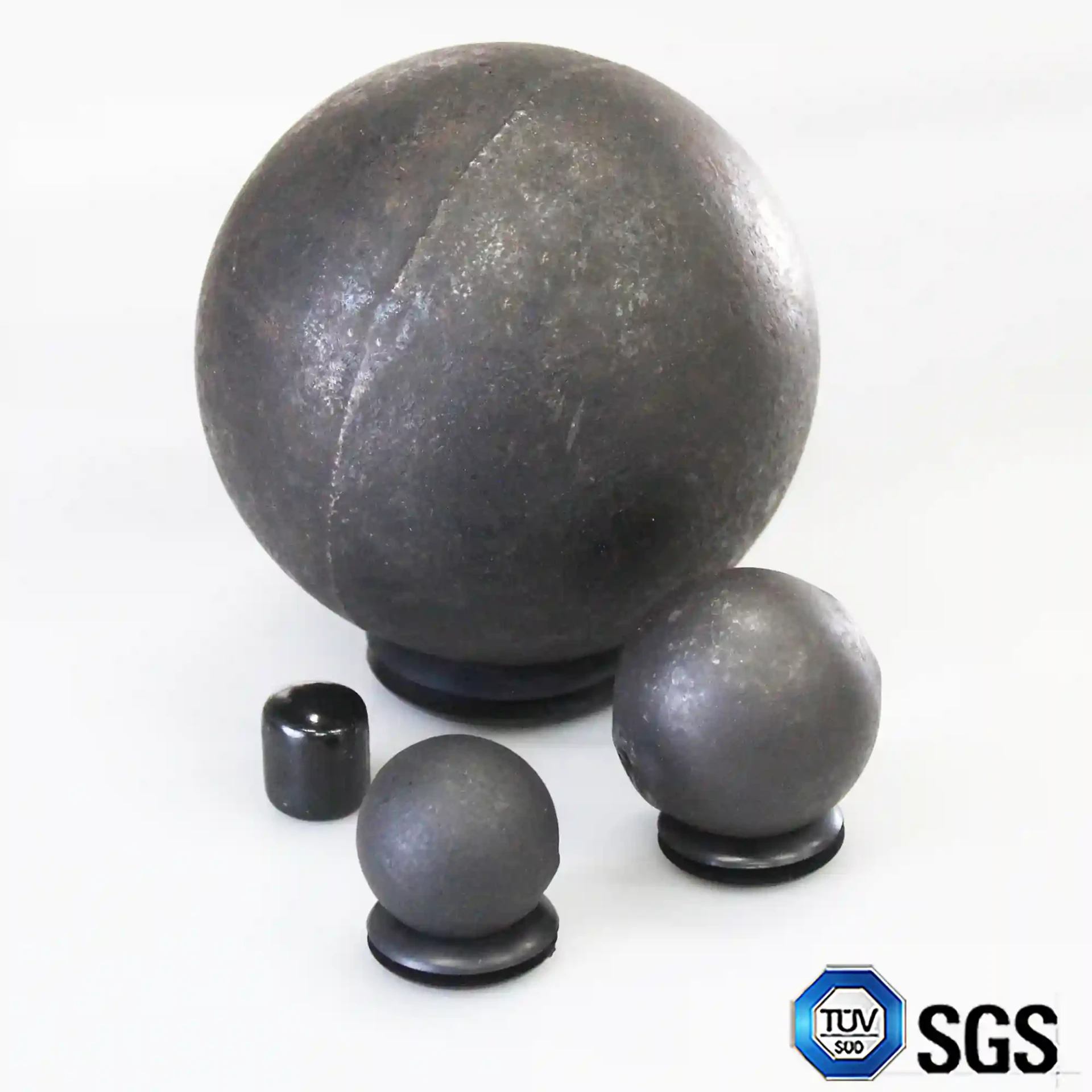
The continuous ball mill is a crucial piece of equipment in numerous industries, from mineral processing and cement production to chemical manufacturing and environmental remediation. Its ability to efficiently grind and blend materials makes it indispensable for achieving desired particle sizes and enhancing product quality. Understanding the principles and applications of the continuous ball mill is vital for engineers, plant operators, and researchers seeking to optimize processes and drive innovation. The benefits are far-reaching, influencing everything from resource utilization to pollution control.
Globally, the demand for efficient and scalable grinding solutions is constantly increasing, driven by population growth, industrial expansion, and stricter environmental regulations. Continuous ball mills offer a robust and reliable solution to meet these demands, providing a consistent product quality and high throughput. While traditional batch ball mills still have their place, the continuous operation of these mills leads to improved productivity and reduced downtime.
The increasing emphasis on sustainable practices further elevates the importance of continuous ball mills. Optimization of milling processes contributes to energy efficiency and minimizes waste generation. The continuous ball mill, as a cornerstone of material processing, plays a key role in fostering a more sustainable and responsible industrial landscape.
Introduction to Continuous Ball Mill
A continuous ball mill represents a significant advancement over traditional batch ball mills, offering continuous feed and discharge of materials. This allows for higher throughput, improved process control, and reduced operational costs. It’s a critical component in many industrial processes where consistent particle size reduction is paramount.
The continuous ball mill’s design facilitates an uninterrupted grinding cycle, minimizing downtime and maximizing productivity. This is particularly valuable in large-scale operations where efficiency is crucial. Its adaptability to various material types and grind sizes further enhances its versatility and broadens its range of applications.
Global Relevance and Industry Context
The demand for continuous ball mills is directly tied to the growth of key industries such as mining, cement production, and chemical processing. According to the World Bank, global mineral production is projected to increase significantly in the coming decades, driving the need for more efficient grinding technologies like the continuous ball mill.
In cement production, which accounts for a substantial portion of global CO2 emissions, optimizing the grinding process through the use of continuous ball mills can contribute to energy savings and reduced environmental impact. The International Energy Agency (IEA) emphasizes the importance of improving energy efficiency in the cement industry, and continuous ball mills play a role in achieving this goal.
Furthermore, environmental regulations concerning particulate matter emissions are becoming increasingly stringent worldwide. Continuous ball mills, when coupled with effective dust control systems, help industries comply with these regulations by minimizing airborne dust generated during the grinding process. This underscores the vital role of this technology in promoting sustainable industrial practices.
Defining the Continuous Ball Mill
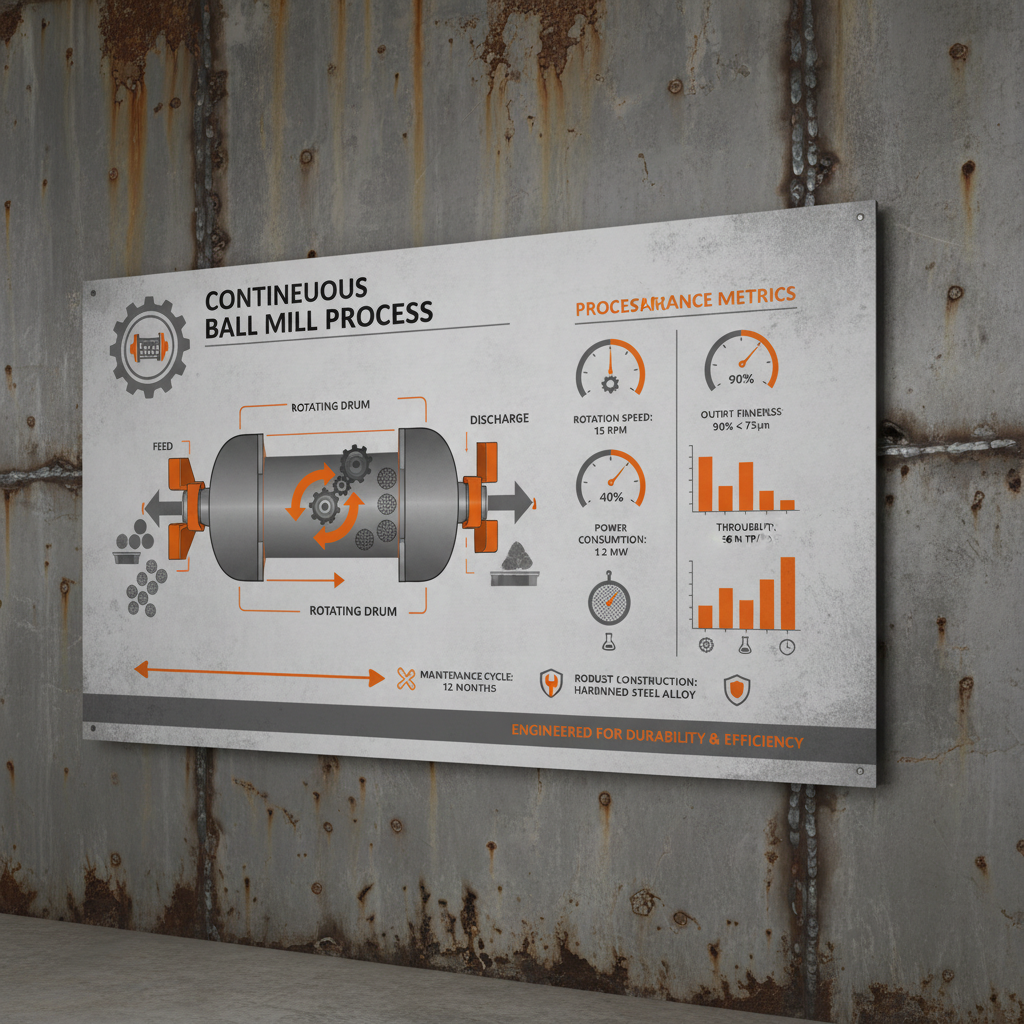
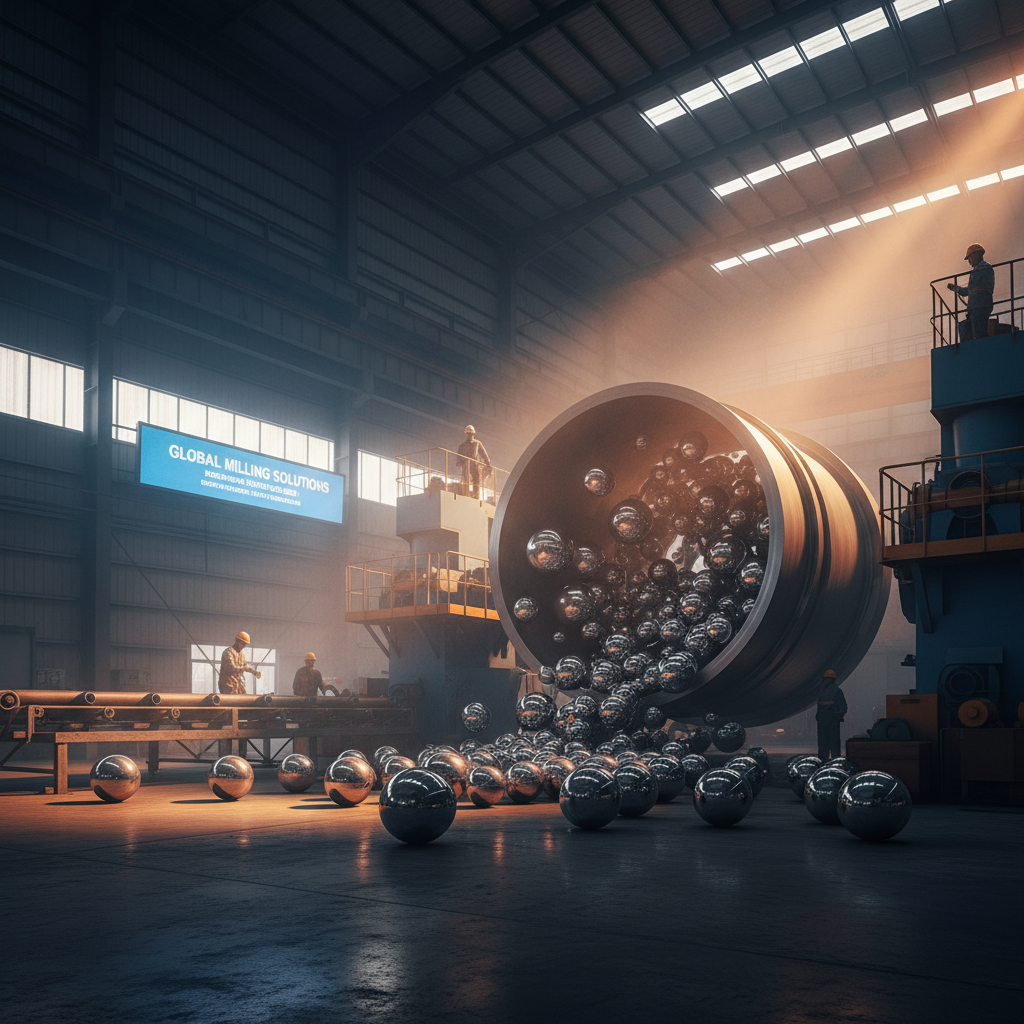
A continuous ball mill is a grinding machine used to reduce the size of materials, functioning via the impact and attrition of grinding media—typically steel balls—within a rotating cylindrical chamber. Unlike batch ball mills, which process a fixed amount of material per cycle, continuous ball mills operate with a constant inflow of feed material and a corresponding outflow of finished product.
The core principle involves the cascading effect of the steel balls as the cylinder rotates. This creates a grinding action that breaks down the material into finer particles. The continuous feed and discharge systems ensure a consistent product quality and throughput, making it well-suited for large-scale industrial applications.
This technology connects directly to modern industrial needs by providing a scalable and reliable solution for particle size reduction. It supports advancements in diverse fields, from pharmaceutical formulation requiring micron-sized particles to materials science needing precise powder characteristics, playing a vital role in both industrial progress and societal benefit.
Key Factors of Continuous Ball Mill Performance
Several factors influence the effectiveness of a continuous ball mill. First, the mill’s speed directly affects the grinding action; optimal speeds ensure sufficient impact and attrition without excessive energy consumption. Second, the ball charge—the ratio of ball mass to material mass—impacts grinding efficiency and product fineness.
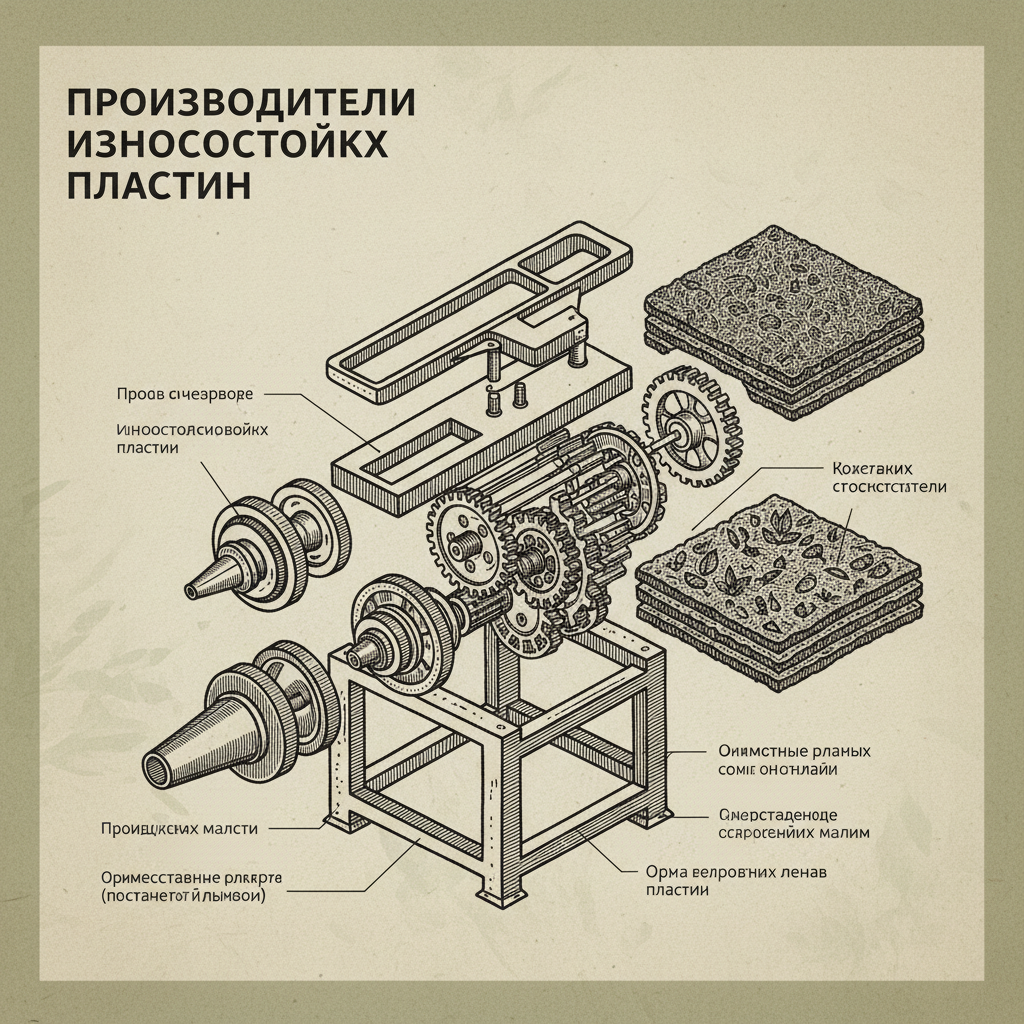
The material characteristics of both the feed and the grinding media are also crucial. Harder materials may require longer residence times or a larger ball charge. Finally, the liner material within the mill cylinder impacts wear resistance and can affect product contamination.
Continuous Ball Mill Performance Indicators
Global Applications & Use Cases
Continuous ball mills are widely employed in the mining industry for processing ores and separating valuable minerals. In South America, large-scale copper mines utilize these mills to grind ore prior to flotation, significantly increasing metal recovery rates. Similarly, in Australia, iron ore processing relies heavily on continuous ball milling.
The cement industry is another major consumer of continuous ball mill technology. In China and India, cement plants utilize these mills for clinker grinding, ensuring consistent cement quality and production capacity. Additionally, the chemical industry utilizes continuous ball mills for producing pigments, paints, and various chemical compounds.
Even in remote industrial zones like parts of Siberia, where accessing sophisticated equipment can be challenging, continuous ball mills provide a reliable solution for processing locally sourced minerals and materials. This underscores their adaptability and importance in supporting regional economic development.
Advantages and Long-Term Value
The advantages of continuous ball mills extend beyond simple efficiency. The continuous operation translates into substantial cost savings by reducing downtime and labor requirements. Moreover, the consistent product quality leads to increased customer satisfaction and reduced material waste.
From a sustainability standpoint, optimized continuous ball mill operation minimizes energy consumption per ton of material ground, contributing to a lower carbon footprint. Reliability and durability also add significant long-term value, decreasing the need for frequent replacements and reducing overall lifecycle costs.
Future Trends and Innovations
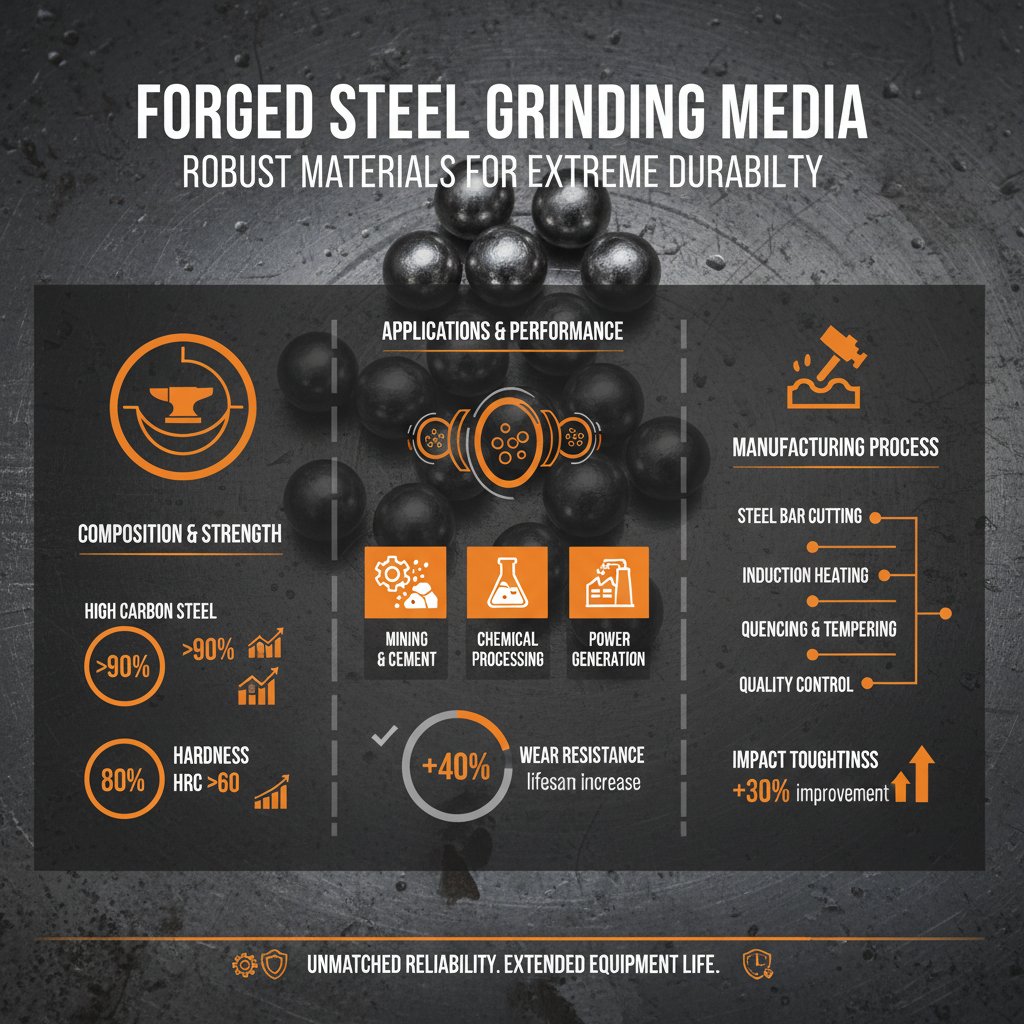
Several trends are shaping the future of continuous ball mill technology. The integration of advanced sensors and real-time data analytics allows for predictive maintenance and optimized process control, maximizing efficiency and minimizing unexpected downtime. The development of new grinding media materials with improved wear resistance also extends the lifespan of the mill and reduces maintenance costs.
Furthermore, research into energy-efficient mill designs, incorporating variable frequency drives and optimized ball charge configurations, aims to further reduce energy consumption. The integration of digital twins—virtual replicas of the mill—enables remote monitoring and simulation, facilitating proactive problem-solving and improved performance.
Challenges & Solutions
One major challenge is managing wear and tear on the mill’s internal components, particularly the liners and grinding media. This necessitates regular inspections and replacements, contributing to maintenance costs and downtime. Innovative solutions include the use of wear-resistant materials, advanced liner designs, and automated inspection systems.
Another challenge is controlling dust emissions during the grinding process. Implementing effective dust collection systems, such as baghouses and electrostatic precipitators, is crucial for complying with environmental regulations. Optimizing the mill's sealing design also helps minimize dust leakage.
Finally, optimizing energy efficiency remains a constant focus. Utilizing variable frequency drives to control the mill’s speed, implementing intelligent ball charge control systems, and leveraging data analytics to identify energy-saving opportunities can significantly reduce energy consumption.
Summary of Continuous Ball Mill Challenges and Solutions
| Challenge |
Impact on Continuous Ball Mill |
Proposed Solution |
Expected Outcome |
| Wear and Tear |
Increased Maintenance Costs & Downtime |
Wear-resistant Materials, Automated Inspections |
Reduced Maintenance, Increased Uptime |
| Dust Emissions |
Environmental Non-Compliance, Safety Hazards |
Dust Collection Systems (Baghouses, ESPs) |
Improved Air Quality, Regulatory Compliance |
| Energy Consumption |
High Operating Costs, Carbon Footprint |
Variable Frequency Drives, Intelligent Ball Charge Control |
Lower Energy Bills, Reduced Emissions |
| Process Control |
Inconsistent Product Quality |
Real-Time Data Analytics, Advanced Sensors |
Enhanced Product Consistency, Optimized Performance |
| Material Feed Consistency |
Fluctuations in Grinding Efficiency |
Automated Feed Control Systems |
Stable Grinding Process, Consistent Output |
| Scaling Up Production |
Difficulties in Maintaining Efficiency |
Modular Mill Designs, Digital Twin Technology |
Smooth Production Scaling, Optimized Performance |
FAQS
The core difference lies in operation. Batch ball mills process a fixed volume of material per cycle, requiring start-stop cycles. Continuous ball mills operate with constant material feed and discharge, resulting in higher throughput and more consistent product quality. Continuous mills also generally require less manual intervention, reducing labor costs. They are best suited for large-scale operations, while batch mills may be preferred for smaller, specialized applications.
The ball charge – the ratio of the mass of grinding media to the mass of material being ground – is a critical parameter. A higher ball charge generally leads to faster grinding rates but also increases energy consumption. Conversely, a lower ball charge reduces energy use but may slow down the grinding process. The optimal ball charge depends on the material's hardness, desired particle size, and mill configuration.
Steel balls are the most common grinding media due to their high strength, durability, and cost-effectiveness. However, other materials like ceramic balls (alumina, zirconia) are used for specialized applications where contamination from steel is undesirable, such as in pharmaceutical or cosmetic industries. The choice of material depends on the material being ground and the desired product purity.
Optimizing energy efficiency involves several strategies. Using variable frequency drives (VFDs) to control the mill’s speed allows for adjusting energy consumption to match the grinding requirements. Implementing intelligent ball charge control systems and optimizing liner designs can also significantly reduce energy waste. Regular maintenance to ensure optimal mill operation and minimizing material slippage contribute to better energy performance.
Several factors influence mill selection. The material’s hardness, abrasiveness, and required particle size are paramount. Throughput requirements, budget constraints, and available space are also essential considerations. Additionally, the mill's operating environment—temperature, humidity, and the presence of corrosive substances—should be factored in to ensure long-term reliability and performance.
Predictive maintenance relies on continuously monitoring key parameters like vibration, temperature, and power consumption. Advanced sensors and data analytics can identify patterns that indicate potential failures, allowing for proactive maintenance interventions. This minimizes unplanned downtime, reduces maintenance costs, and extends the lifespan of the mill. Regularly scheduled inspections and component replacements based on data analysis are crucial.
Conclusion
In conclusion, the continuous ball mill stands as a cornerstone technology in a vast range of industries, providing an efficient and scalable solution for particle size reduction. From mineral processing and cement production to chemical manufacturing and beyond, its ability to deliver consistent product quality and high throughput makes it indispensable for modern industrial operations. Its continued development and integration with innovative technologies ensure its continued relevance in a rapidly evolving world.
Looking ahead, the future of continuous ball milling lies in the seamless integration of data analytics, automation, and sustainable practices. Embracing these advancements will unlock even greater efficiencies, reduce environmental impact, and enhance the long-term value of this essential technology. For more information on our continuous ball mill solutions, visit our website: www.cdchengda.com