High Chromium Wear Resistant Mídia de Moagem China Solutions
Selecting the right grinding media is a critical engineering decision that directly impacts the throughput and energy efficiency of mineral processing plants. In high-abrasion environments like cement production, mining, and quarrying, the balance between hardness and impact toughness determines the lifespan of the milling charge. High chromium cast iron has emerged as the industry standard for those seeking to reduce wear costs while maintaining precise gradation in the final product.
Chengda specializes in the development of advanced wear-resistant materials, offering tailor-made solutions ranging from 15mm to 140mm in diameter. By optimizing chrome content between 1% and 30%, we enable operators to achieve a significant reduction in carbon footprint through lowered energy consumption. Whether it is the primary crushing stage or the fine attrition grinding in the second chamber, the metallurgy is engineered to withstand severe corrosive and abrasive stress.

Metallurgical Engineering of High Chromium Cast Grinding Media
The performance of grinding media depends heavily on the microstructure of the alloy. Our high chromium cast iron is designed to provide a synergistic combination of high surface hardness and core toughness. By utilizing a precisely controlled heat treatment process, we ensure that the chromium carbides are evenly distributed, which prevents premature spalling and cracking under high-impact conditions.
For primary milling chambers, we produce larger balls (60mm to 140mm) with chrome levels typically between 10% and 28%. These components are engineered for high potential energy to crush coarse feed material, requiring a hardness range of 57 to 66 HRc. In contrast, the second chamber utilizes smaller balls (15mm to 60mm) with higher chrome content up to 30% and hardness reaching 60 to 69 HRc to maximize attrition efficiency and ensure a consistent final particle size.
- Wear Resistance: High chrome content minimizes material loss during abrasive contact.
- Corrosion Protection: The alloy composition prevents chemical degradation in wet milling processes.
- Impact Stability: Optimized toughness prevents catastrophic breakage of the balls.

Precision Quality Control and Hardness Uniformity
One of the most significant challenges in casting grinding media is the variance between surface and core hardness. While national standards typically allow a difference of up to 3 HRC, our patented processing technology has pushed this limit further. Our high-performance media achieves a surface hardness of 59 HRC and a core hardness of 58.8 HRC, resulting in a difference of less than 0.2 HRC. This uniformity is vital for preventing internal stress fractures.
To maintain this level of precision, we employ a full-process inspection center. Every batch undergoes rigorous testing using German direct reading spectrometers and fully automatic carbon-sulfur analyzers. Our quality assurance protocol includes:
- Raw Material Inspection: Ensuring the purity of alloying elements before melting.
- Semi-finished Analysis: CNC electric spark cutting is used to verify internal microstructure.
- Finished Product Testing: Rockwell hardness and impact testing (achieving 10 J/cm²) ensure every ball meets the specified tolerance.
Operational Benefits in Mining and Metallurgical Applications
Implementing high-grade grinding media leads to a measurable improvement in mill productivity. By maintaining a consistent gradation of the abrasive body over a longer period, the mill can operate at peak efficiency without frequent shutdowns for media replenishment. This stability not only improves the output of the mill but also optimizes the flotation process by improving metal recoveries.
For international users in the mining sector, the shift to high-chromium alloy media has resulted in a lower total cost of ownership. The "do more with less" philosophy is realized through reduced power consumption and decreased labor intensity, as the clearance cycles are extended. The reduction in wear rates means fewer stops for repair, directly enhancing the equipment availability and overall plant uptime.
Technical Specifications and Application Matrix
| Ball Diameter | Chrome Range | Hardness (HRc) | Primary Application |
|---|---|---|---|
| 140mm - 60mm | 10% – 28% | 57 – 66 | Primary Crushing / First Chamber |
| 60mm - 15mm | 10% – 30% | 60 – 69 | Fine Grinding / Second Chamber |
| Custom Sizes | 1% – 30% | Application-specific | Specialized Metallurgy / Cement |
| Ultra-High Chrome | High Range | 58.8 - 59.0 | Extreme Abrasive Environments |
| Standard Alloy | Mid Range | Standard HRC | General Mining & Quarrying |
Comparing Grinding Media Selection Criteria
When evaluating suppliers for grinding media, procurement managers must look beyond the initial purchase price and focus on the "cost per ton" of processed material. High-chromium media may have a higher upfront cost than forged steel, but its superior wear resistance often results in a 20% to 50% reduction in consumption rates depending on the ore hardness.
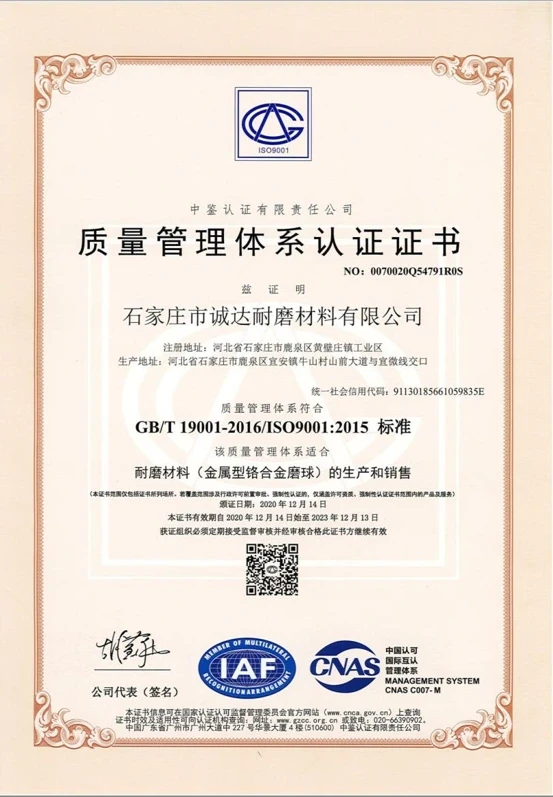
Key evaluation factors include the supplier's ability to provide consistent metallurgy across large volumes. With an annual capacity exceeding 60,000 tons and ISO 9001:2015 certification, our automated production lines eliminate the human error associated with manual casting. This ensures that whether a client orders 300 tons or 4,000 tons annually, the physical properties remain identical, preventing unpredictable mill behavior.
Future Trends in Wear-Resistant Material Design
The industry is moving toward "smart" wear management, where the chemical composition of the grinding media is adjusted in real-time based on the varying hardness of the feed material. We are continuing to develop ultra-high chromium alloys that offer even lower wear rates without sacrificing the impact toughness required for large-scale ball mills.
Sustainability is also driving innovation. By reducing the frequency of media replacement and optimizing the grinding efficiency, we help our clients reduce their energy consumption and overall carbon footprint. The integration of digitalization in quality management ensures that every batch of mídia de moagem china produced is tracked and optimized for the specific geological characteristics of the customer's mine.
Frequently Asked Questions Regarding Grinding Media
What is the main difference between forged steel balls and high chromium cast balls?
Forged steel balls generally offer higher impact toughness but lower wear resistance. High chromium cast balls are engineered for extreme abrasion resistance and corrosion protection, making them more suitable for long-term use in cement and mining mills where material loss must be minimized.
How does surface and core hardness variance affect the lifespan of the media?
A large difference in hardness creates internal stress, which can lead to the balls cracking or spalling during operation. Our patented technology keeps the difference below 0.2 HRC, ensuring the ball wears down evenly without structural failure.
Can you customize the chrome content for specific mineral types?
Yes, we offer chrome content ranging from 1% to 30%. The exact percentage is decided after a technical analysis of the application and test work to ensure the media matches the hardness and corrosivity of the material being ground.
What standards do your products comply with?
Our production strictly adheres to international standards, including ASTM, JIS, DIN, and BS, ensuring compatibility and quality for our global user base of over 1,000 international clients.
How does using high-chromium media impact energy costs?
By maintaining a consistent size distribution and improving grinding efficiency, the mill requires less energy to achieve the desired particle size, effectively reducing the carbon footprint and power bills of the operation.
What is the typical diameter range for the balls you manufacture?
We manufacture grinding media in sizes ranging from 15 mm to 140 mm, covering everything from primary crushing in the first chamber to fine attrition grinding in the second chamber.
Technical References and Industry Standards
- ASTM International Standards for Cast Iron
- ISO 9001 Quality Management Systems
- DIN Technical Specifications for Wear Materials
- BS British Standards for Mining Equipment
For companies looking to optimize their milling process, choosing a supplier with integrated R&D and rigorous quality control is essential. Chengda provides the technical expertise and production capacity to deliver high-performance grinding solutions that reduce wear costs and enhance productivity.
Industry Insights and Technical Updates