Nov . 10, 2026 00:55 Back to list
Manganese steel plate price: Match the lining to impact and wear
Manganese steel plate price should be assessed with the grade, hardness, impact requirement, installation gap, and processing environment in view. Our high manganese steel lining plates use ZGMn13Cr2 or ZGMn18Cr2 and suit mining, cement, power, and steel equipment operating in wet, dry, or mixed conditions. This guide explains the specification checks to make before requesting a quotation.

Operating duty: repeated impact, abrasive friction, and whether processing is wet, dry, or mixed.
Material and mechanical requirements: ZGMn13Cr2 or ZGMn18Cr2, HRC 45-55 hardness, and impact toughness of at least 25 J/cm².
Installation fit: plate geometry, equipment position, and the 3-9 mm gap between adjacent plates.
Manganese steel plate price becomes easier to compare when the lining duty is defined first. A plate for a high-impact crusher, mill, or grate section needs a different quotation request from a general steel sheet. We recommend starting with four checks: the material grade, the balance between hardness and toughness, the processing environment, and the fit of the plates inside the equipment.
Match the lining to the operating duty
High manganese steel, also known as Hadfield steel, contains 10% to 15% manganese and 0.90% to 1.50% carbon. Under severe impact or contact stress, its surface hardens while the core remains tough. That combination supports wear and impact resistance in equipment exposed to abrasive contact.
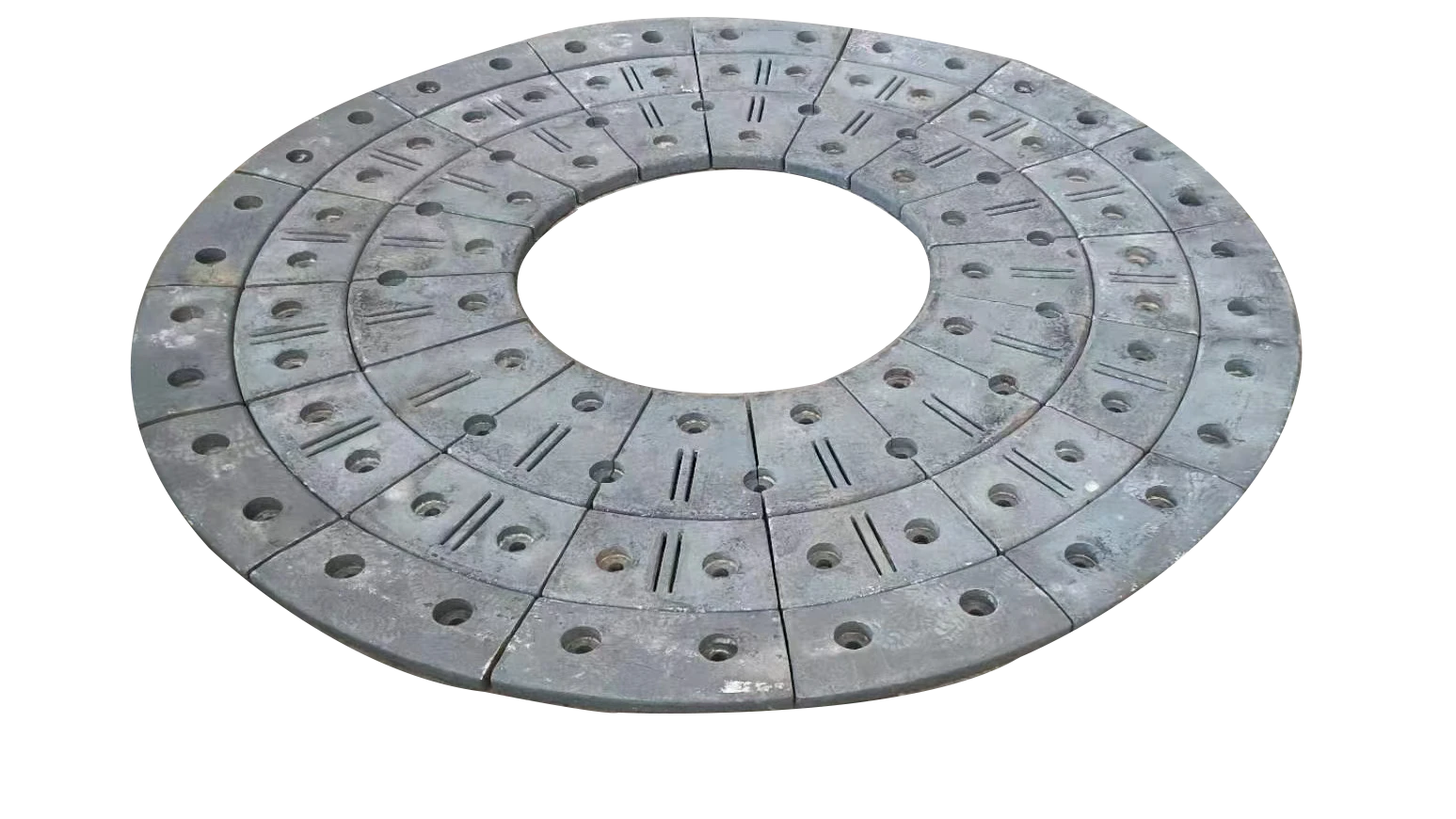
We supply high manganese steel lining plates for mining, cement, electric power, iron and steel, and metallurgy applications. The plates suit wet, dry, and mixed mineral-processing environments. Select this lining when the equipment receives repeated impact from abrasive material and the protected section needs a surface that can work-harden during service.
The operating position still matters. Material flow, impact level, and plate geometry affect the design required for a mill, crusher, grate, or other protected section. Include the equipment position and process conditions in your inquiry so we can assess the lining arrangement instead of quoting against a general product name.
Put the grade in the quotation request
Our common high manganese steel grades are ZGMn13Cr2 and ZGMn18Cr2. Naming one of these grades gives the quotation a defined material basis and helps you compare offers using the same starting point.
The quenching hardness is HRC 45 to 55, approximately HB 390 to 478. Impact toughness is at least 25 J/cm². Read these properties together: hardness describes the working surface, while toughness relates to the plate's ability to withstand repeated impact. For an impact-heavy section, a request that includes both values gives a clearer basis for choosing the lining.
A manganese steel plate price should therefore be reviewed beside the grade, hardness, and impact toughness. Send your preferred grade or the equipment duty, and we can align the material request with the working section.
Understand the work-hardening surface
Cold work hardening is the main reason this material suits combined impact and abrasion. Friction and contact stress increase the surface hardness during operation, while the inner material retains toughness. The surface response develops from the conditions created by the equipment and the abrasive feed.
Picture a mill or crushing section receiving repeated heavy feed. The lining must absorb the initial impact and continue facing friction as material moves through the equipment. Our high manganese steel lining plates fit this type of duty in mining and metallurgy equipment, as well as in cement, power, and steel applications where impact and abrasion occur together.
Work hardening is not a substitute for checking the application. Tell us the equipment type, installation position, and whether the process is wet, dry, or mixed. Those details help us relate the material behavior to the protected area.
Check the plate arrangement before ordering
Adjacent plates should have a gap of 3 mm to 9 mm. This range needs to be considered during a replacement project and when a new lining arrangement is being prepared. Measure the protected surface, record the existing plate layout, and check the available clearance before finalizing the order.
Our plates can use direct fit or cement mortar filling, depending on the equipment design. The filling material and arrangement should follow the design requirement for the mill or other protected equipment. A suitable material grade still needs a plate shape and layout that fit the cylinder or impact zone.
For a replacement, send the equipment model, a drawing or existing plate dimensions, the number of pieces, and the position of each plate. This gives us the information needed to review the physical arrangement rather than treat the order as a generic flat plate request.
Select the product for your working section
Our high manganese steel lining plates suit mining, cement, power, iron and steel, and metallurgy equipment where repeated impact and abrasive friction occur together. They fit applications requiring ZGMn13Cr2 or ZGMn18Cr2, HRC 45 to 55 hardness, impact toughness of at least 25 J/cm², and wet, dry, or mixed processing compatibility.
Choose these plates for mill, crusher, grate, and other heavy-equipment lining duties when surface work hardening and a tough core are part of the selection. Their fit still depends on the equipment geometry, operating conditions, plate arrangement, and installation method. We need those details to confirm the requested shape and layout.
Questions to settle before requesting a quote
Is this lining suitable for a wet mineral-processing section?
Yes. Our high manganese steel lining plates are suitable for wet, dry, and mixed mineral-processing environments. For a wet section, identify the equipment and protected position in the inquiry, then describe the material flow and impact duty. This lets us relate the selected ZGMn13Cr2 or ZGMn18Cr2 option to the actual lining location instead of treating the environment as the only selection factor.
Can the plates be installed without cement mortar?
Yes. Direct fit is one available installation method, while cement mortar filling is another. The suitable method depends on the equipment design and the arrangement of the protected surface. Include the installation position and a drawing or existing plate layout in your request so we can review whether the proposed plate geometry matches the intended fit.
Which equipment details should accompany a replacement inquiry?
Send the equipment model, the protected position, a drawing or existing plate dimensions, the number of pieces, and the process environment. These details define the replacement arrangement and help us address the plate shape and quantity. If adjacent plates are being replaced, include the intended 3 mm to 9 mm gap arrangement with the layout information.
Prepare the quotation request
Choose our high manganese steel lining plates when impact, abrasive friction, and surface work hardening define the lining duty. To obtain a useful manganese steel plate price, send the equipment name and model, grade preference, plate drawing or dimensions, quantity, installation position, process environment, and intended installation arrangement.

About the author
The company
Shijiazhuang Chengda Wear Resistant Materials Co.,Ltd
Shijiazhuang Chengda Wear resistant materials Co.,LTD. a certified ISO 9001Company, specializes in the design, development, production, and servicing of high chromium wear resistant materials for grinding equipment in cement, mining and quarry industries. CHENDDA manufactures High chromium cast grinding media which is wear, corrosion and impact resistant helps in efficient ball mill grinding.Our grinding media is tailor made for each milling application.…
About Us ↗Visit company website ↗-
Alloy liner FAQ: grades, hardness, applications, and ordering details
NewsNov.02,2026
-
Low Chrome Grinding Media FAQ: Specifications, Ordering and Support Questions
NewsOct.30,2026
-
High Chrome Grinding Ball Price vs Medium Chrome: Choosing Grinding Balls by Application Fit
NewsOct.22,2026
-
Optimize Industrial Milling with High Quality мелющие тела
NewsJul.01,2026
-
High Performance шлифовальные шары для добычи полезных ископаемых
NewsJun.29,2026