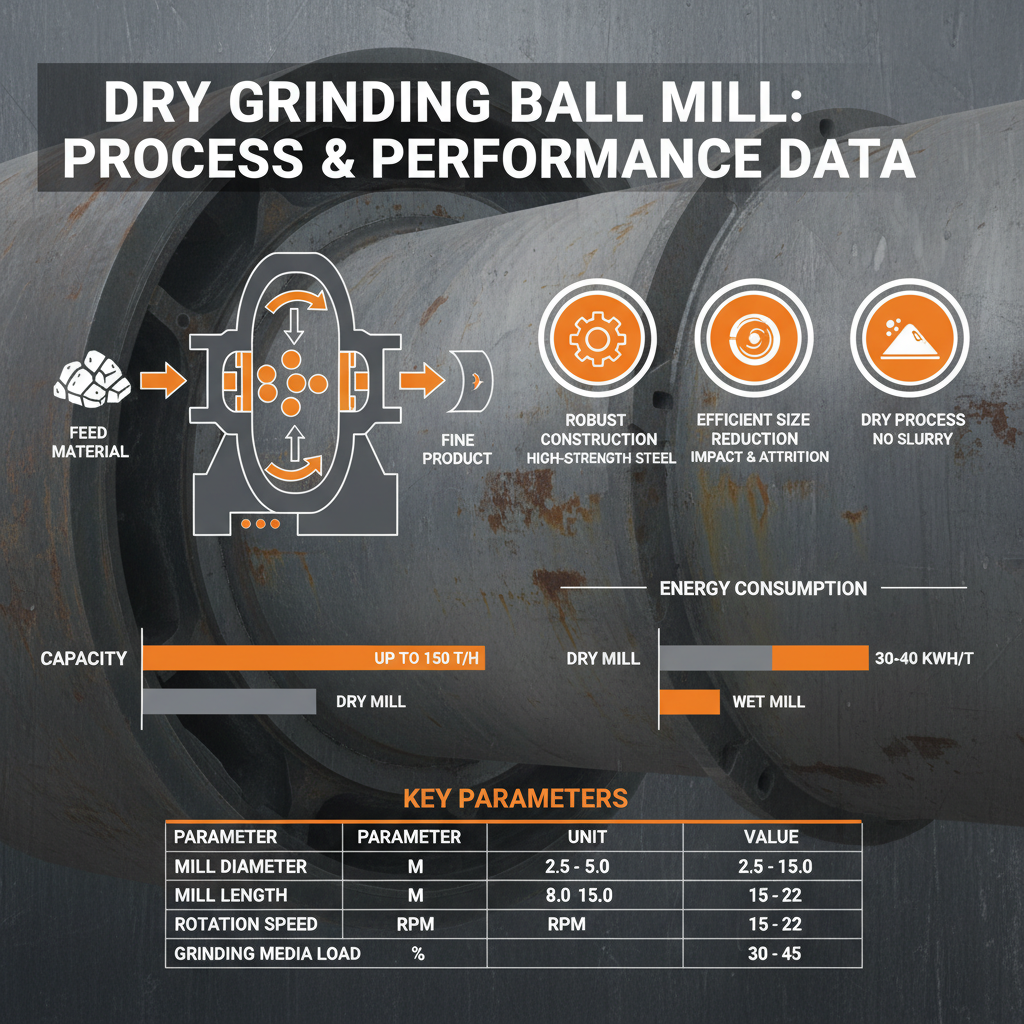
Selecting the right grinding media is a critical technical decision that directly impacts the operational efficiency of ball mills in heavy industries. For many procurement managers in the mining and cement sectors, finding reliable medios de molienda china that balance hardness with impact toughness is the primary challenge. The choice of media determines not only the final particle size distribution of the processed material but also the frequency of mill shutdowns for liner and ball replacement.
The relationship between material composition and wear rates is where the most significant cost savings are found. High-chromium steel balls, specifically those with chromium levels between 10% and 30%, provide a necessary evolution from traditional forged steel. By integrating products like High Chrome Grinding Balls For Mining and Ultra High Chrome Grinding Balls, operators can significantly reduce the consumption rate of the media, which in turn lowers the overall carbon footprint and energy cost per ton of output.
This analysis explores the technical nuances of high-chromium casting, comparing different alloy levels and their specific applications across the steel, cement, and mineral industries. By understanding the mechanical properties of these materials, businesses can transition from simple purchasing to strategic optimization. For those seeking high-performance solutions, medios de molienda china provides the necessary metallurgical precision to enhance mill productivity.


High chromium cast grinding media are engineered by controlling the chromium content—typically 10% or higher—to create a microstructure consisting of hard carbides embedded in a martensitic or pearlitic matrix. This specific combination allows the balls to resist both abrasive wear and corrosive environments, making them far more durable than standard carbon steel media in chemical-heavy milling processes.
At Shijiazhuang Chengda Wear resistant materials Co.,LTD, the casting process is optimized to ensure uniform hardness, typically ranging from 58 to 68 HRC. By utilizing oil quenching and precise alloying, the media maintains a spherical shape longer, which ensures a consistent grinding force and prevents the premature degradation of the mill's internal lining.
The primary factor determining the lifespan of grinding media is the balance between hardness and toughness. While extreme hardness (high HRC) prevents surface abrasion, excessive brittleness can lead to catastrophic ball fracture under heavy impact loads. Therefore, the alloying elements—specifically Chromium, Carbon, and Manganese—must be precisely balanced based on the feed material's hardness.
Effective wear resistance is not just about the hardness of the material, but the ability of the medium to maintain its particle size distribution and roundness over thousands of hours of operation, thereby ensuring a stable mill throughput.
Beyond chemistry, the heat treatment process plays a vital role. Oil quenching is employed to achieve the desired martensitic structure, which provides the necessary strength to withstand high-intensity grinding. When these factors are aligned, the result is a significant reduction in the broken rate, which Chengda keeps below 0.5% for its high-chromium range.
Optimizing chromium content allows operators to tailor the media to the specific stage of the milling process. In the first chamber, where primary crushing occurs, balls ranging from 60mm to 140mm with a chrome range of 10%–28% are used to provide the necessary potential energy for crushing raw feed.
Increasing chromium content up to 30% dramatically enhances corrosion resistance and surface hardness, which is essential for fine grinding in the second chamber to improve the quality of the final product.
The economic value of this optimization is seen in the reduction of "down-time." High-wear resistance means fewer stops for media replenishment and a longer clearance cycle for the mill, which directly translates to higher annual tonnage and lower labor costs for maintenance crews.
Different alloy designations, such as ZQCr12 through ZQCr26, offer distinct mechanical advantages. For instance, ZQCr12 (10-14% Cr) provides a balance of toughness and hardness suitable for general mining, while ZQCr26 (23-27% Cr) is designed for extreme abrasion resistance in cement clinker grinding.
By analyzing the impact energy (AK) and falling times, it becomes clear that higher chromium grades maintain their structural integrity under higher stress, provided the heat treatment is executed correctly. This allows for a higher grinding density and improved energy efficiency during the pulverization process.
In the cement industry, high chromium balls are indispensable for grinding clinker and gypsum. The high hardness prevents the media from wearing down rapidly against the abrasive nature of the clinker, reducing energy consumption in the coal mills and ball mills while ensuring a finer, more consistent powder quality.
In the mineral and power industries, these media are used for grinding metal ores and pulverized coal. In power plants, the wear resistance of the grinding bodies ensures that the combustion chamber structure is protected and that fuel is ground to an optimal size for maximum combustion efficiency.
One of the most significant risks in grinding operations is the high fracture rate of the media, which can damage the mill lining and contaminate the final product with metallic shards. This is often caused by using media that is too hard (brittle) for the impact level of the first chamber.
The solution lies in selecting a grade with appropriate impact energy (AK). For example, utilizing a pearlitic-martensitic structure (P+C/M+C) for medium-chrome balls can offer better toughness than a purely martensitic structure, reducing the risk of shattering under heavy loads.
By conducting technical analysis and test work before deployment, companies can determine the optimal alloy range (from 0.8% to 28% Cr) and size (4.6mm to 150mm) required for their specific application, ensuring a broken rate of less than 0.5%.
Choosing the correct media requires a deep dive into the chemical composition and the mechanical requirements of the mill. Buyers must evaluate the chromium content against the HRC hardness and the expected falling times to ensure the media can withstand the specific gravity of the ore.
Furthermore, the size of the ball must be matched to the feed size. Larger balls (up to 140mm) are necessary for the initial crushing stage, while smaller balls (15mm to 60mm) are required for attrition grinding in the second chamber to achieve the desired fineness.
The following table provides a comparative overview of common high-chromium alloy designations used in industrial grinding applications to assist in the selection process.
| Designation | Cr Content (%) | Hardness (HRC) | Microstructure |
|---|---|---|---|
| ZQCr26 | 23.0 - 27.0 | ≥58 | M+C |
| ZQCr20 | 18.0 - 23.0 | ≥59 | M+C |
| ZQCr15 | 14.0 - 18.0 | ≥60 | M+C |
| ZQCr12 | 10.0 - 14.0 | ≥60 | M+C |
| ZQCr8 | 7.0 - 10.0 | 50 - 65 | P+C/M+C |
| ZQCr2 | 1.0 - 3.0 | ≥48 | P+C |
The main difference is the chromium content, where high chrome balls typically have ≥10% Cr. This higher chromium level results in significantly increased hardness (up to 68 HRC) and superior corrosion resistance compared to low chrome options. Consequently, high chrome media lasts longer and maintains its roundness better in abrasive and corrosive environments, such as cement clinker grinding.
Ball size selection depends on the milling chamber. For the first chamber (crushing), larger balls (60mm to 140mm) are used to provide the impact energy needed for large feed materials. For the second chamber (fine grinding), smaller balls (15mm to 60mm) are used to increase the surface area of contact, which enhances the attrition grinding efficiency and improves the final product quality.
Ball breakage is usually caused by an imbalance between hardness and toughness, or by choosing a media grade with insufficient impact energy (AK) for the mill's drop height. When the media is too brittle (overly high HRC without proper alloying), it cannot absorb the shock of the impact, leading to fractures. Selecting the correct pearlitic-martensitic structure for high-impact zones can mitigate this risk.
Yes, they are highly versatile, but the specific alloy grade must be matched to the ore. For hard, abrasive minerals, ultra-high chrome balls are ideal. For softer ores where impact is more critical than abrasion, medium-chrome or low-chrome balls with higher toughness are preferred. Technical analysis of the ore is always recommended to decide the optimal chromium percentage.
Higher quality media with better hardness and roundness improves grinding efficiency, meaning the mill can achieve the desired particle size in less time. This reduces the kilowatt-hours consumed per ton of material processed. Additionally, lower wear rates mean fewer mill shutdowns, which reduces the energy spikes associated with restarting heavy machinery.
Lifespan varies based on the material being ground and the mill's operating conditions, but high chrome media typically offers a significantly longer life than forged steel. By maintaining a consistent particle size distribution and resisting corrosion, these balls reduce the frequency of replenishment, often lowering the total cost of ownership over the lifecycle of the mill.
The optimization of grinding media is a fundamental lever for increasing profitability in the cement and mining industries. By moving toward high-chromium cast solutions, operators can achieve a critical balance of hardness and toughness that reduces wear costs, minimizes equipment downtime, and improves overall metal recovery or powder quality. The technical evidence suggests that precise alloy control—ranging from 1% to 30% chromium—is the only way to ensure that the media performs reliably under specific industrial pressures.
For companies looking to reduce their operational carbon footprint and enhance mill productivity, partnering with an experienced manufacturer is essential. Shijiazhuang Chengda Wear resistant materials Co.,LTD provides tailor-made grinding solutions based on rigorous technical analysis. To find the optimal media specification for your specific application, you are invited to explore the professional capabilities available at https://www.cdchengda.com.