
Apr . 09, 2026 02:15 Back to list
Professional Guide and Best Practices for drilling manganese steel
Mastering the Art of Drilling Manganese Steel: A Professional Guide
Working with Hadfield steel or manganese-based alloys presents a unique challenge for any machinist. Because of its exceptional work-hardening properties, drilling manganese steel requires a strategic approach to prevent tool failure and ensure dimensional accuracy. Whether you are repairing heavy-duty mining equipment or fabricating industrial wear plates, understanding the metallurgy of this material is the first step toward success. In this guide, we will explore the best practices, tool selections, and technical parameters to optimize your drilling process and extend the life of your cutting tools.
The Challenge of Work-Hardening in Manganese Steel
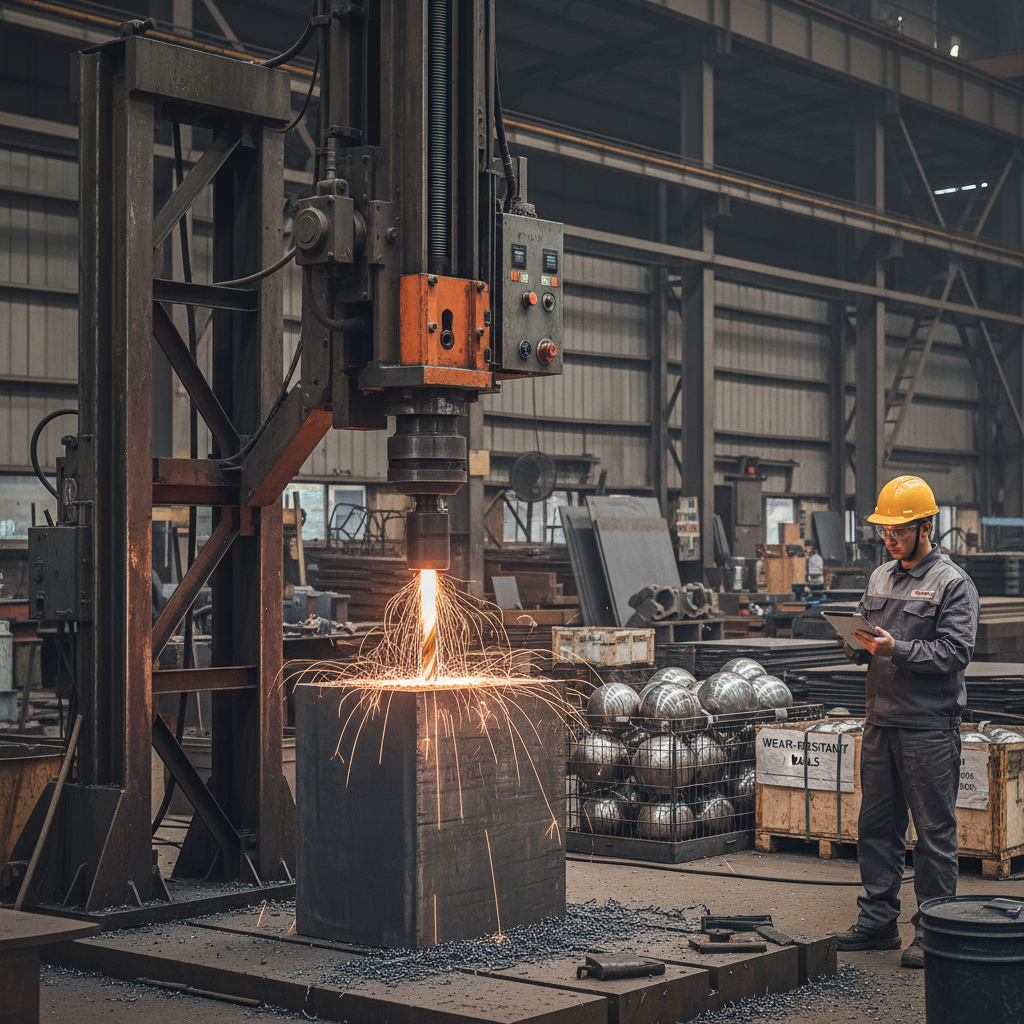
The defining characteristic of manganese steel is its ability to harden rapidly when subjected to impact or mechanical stress. When drilling manganese steel, the friction and pressure from the drill bit can cause the material to harden instantly at the point of contact. If the tool rubs instead of cuts, the surface becomes nearly as hard as a carbide tip, leading to rapid tool wear or complete breakage. This phenomenon makes "glazing" the surface a common and costly mistake. To overcome this, a constant, aggressive feed rate is necessary to ensure the tool penetrates below the hardened layer created by the previous rotation.
Pro Tip: Never stop the feed while the drill is rotating. Any hesitation allows the material to work-harden, making it significantly more difficult for the drill to move forward.
Selecting the Right Tools for Drilling Manganese Steel
Not all drill bits are created equal when dealing with tough alloys. High-Speed Steel (HSS) is often insufficient for large-scale production due to its lower heat resistance. Cobalt-alloyed bits (HSS-Co) are a significant improvement, offering better thermal stability. However, for high-efficiency operations, solid carbide or indexable carbide inserts are the gold standard. Carbide tools maintain a sharper edge at higher temperatures, which is critical when drilling manganese steel. The geometry of the tool should ideally feature a sharper point angle to reduce the thrust force required for penetration.
Comparison of Drill Bit Materials for Manganese Steel
Choosing the right material involves balancing cost, speed, and tool life. While carbide is more expensive upfront, its ability to withstand the rigors of drilling manganese steel usually results in a lower cost per hole. The following table compares the most common materials used in industrial settings.
Optimal Parameters for Drilling Manganese Steel
Achieving a clean hole without destroying your tool requires a precise balance of Speed (RPM) and Feed Rate. A common mistake when drilling manganese steel is running the spindle too fast, which generates excessive heat and accelerates work-hardening. Low speed combined with a high feed pressure is the ideal formula. This ensures that the cutting edge is always removing a chip of material rather than rubbing against the surface.
Parameter Guidelines:
• Cutting Speed: Keep it low to minimize heat generation.
• Feed Rate: Maintain a consistent, heavy feed to stay ahead of hardening.
• Coolant: Use high-pressure sulfurized cutting oil or synthetic coolant.
• Pecking: Avoid excessive pecking; deep, steady cuts are often better.
Cooling and Lubrication Strategies
Heat is the enemy of tool life. When drilling manganese steel, the heat generated can quickly exceed the tempering temperature of HSS tools. Flood cooling is recommended to wash away chips and keep the cutting zone temperate. For deep holes, internal coolant (through-spindle cooling) is highly beneficial as it delivers lubricant directly to the drill point, reducing friction and preventing chip packing, which can lead to tool snap.
Technical Specifications for Tooling Setup
To ensure repeatability and safety, following a standardized specification sheet is essential. When setting up your CNC or manual machine for drilling manganese steel, refer to these general industrial specifications for a baseline.
Conclusion: Precision in Tough Conditions
Successfully drilling manganese steel is a balance of metallurgical understanding and mechanical precision. By choosing carbide tooling, maintaining a consistent feed rate, and utilizing high-quality lubrication, you can transform a frustrating process into a streamlined operation. Remember that the key is to "cut, not rub." Investing in the right tooling and following these professional guidelines will ensure your projects are completed efficiently and your equipment remains in top condition.
Frequently Asked Questions (FAQs)
Why does my drill bit dull almost immediately when drilling manganese steel?
This is almost always caused by work-hardening. If your feed rate is too low or if the tool is slightly dull, the drill bit rubs against the surface instead of cutting into it. This friction creates an ultra-hard layer on the steel that is often harder than the drill bit itself. Once this "glaze" forms, the tool cannot penetrate and wears down rapidly. To prevent this, increase your feed pressure and ensure you are using a sharp, cobalt or carbide bit.
Can I use a standard HSS drill bit for small holes in manganese steel?
While possible for very small diameters or thin materials, it is not recommended for professional work. Standard HSS lacks the thermal stability to handle the heat generated by this alloy. You will likely experience rapid edge rounding. Switching to HSS-Co (Cobalt) is a cost-effective upgrade that significantly improves the drilling experience and tool longevity when drilling manganese steel.
Is it better to use a pilot hole when drilling larger diameters?
Yes, using a pilot hole is highly recommended. A smaller pilot drill reduces the thrust force required for the larger bit and helps center the tool. However, be cautious: the pilot drill will work-harden the center of the hole. To avoid this, ensure the larger drill bit has a point angle that allows it to engage the material beyond the hardened zone created by the pilot bit, or use a high-performance carbide drill that can handle the transition.
Which coolant is most effective for these alloys?
For heavy-duty drilling manganese steel, a high-sulfur cutting oil is often the most effective because it provides superior lubricity and reduces friction at the cutting edge. In CNC environments, a high-concentration synthetic emulsion with extreme pressure (EP) additives is preferred to balance cooling and lubrication. The goal is to keep the temperature low to prevent the material from hardening prematurely.
-
Industrial Guide to Ferro Manganese Medium Carbon for Steel Production
NewsApr.16,2026
-
Comprehensive Guide to DIN 1.3401 Stainless Steel Properties and Applications
NewsApr.07,2026
-
Optimizing Crusher Performance with Durable Manganese Alloys and Steel
NewsApr.04,2026
-
Comprehensive Guide to Chrome Manganese Steel Properties and Industrial Applications
NewsMar.31,2026
-
Understanding the Properties and Applications of Cast Manganese Steel
NewsMar.28,2026